
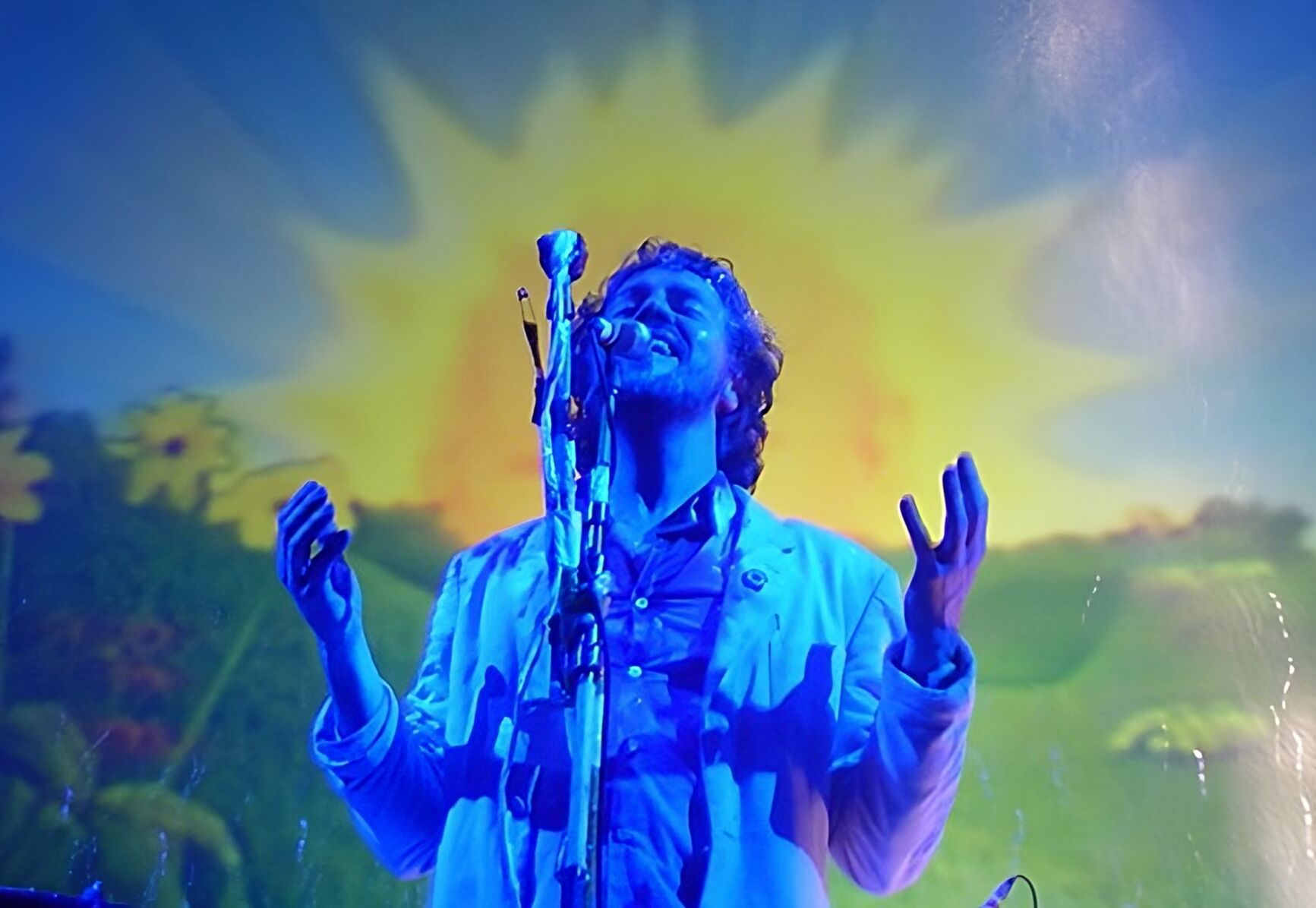
Ask a non-fan what they know about The Flaming Lips and they’ll probably scratch their heads, pause a moment, and say something about “the bubbles” or acid consumption. If you’re lucky, this non-fan might’ve heard of The Lips’ seminal psych pop album The Soft Bulletin, or maybe Yoshimi Battles the Pink Robots- both alternative hits in their day. The general vibe The Lips give off is one of technicolor psychedelia and exuberant weirdness, and rightfully so. (See the six hour song they released inside a light toy. Or, even better, the 24 hour song that came packaged inside a skull.) And they’ve been just as joyous, just as colorful, throughout their nearly forty year run.
Except for 2013’s The Terror.
Recorded in the wake of frontman Wayne Coyne’s separation from his girlfriend of twenty years, and multi-instrumentalist Stephen Drozd’s heroin relapse, The Terror is unlike anything else in the Lips catalogue. The pop influenced melodies of the past are gone. The rhythm section’s pulverized. Songs stretch past the ten minute mark while vamping between two chords. Most of the instrumentation’s composed of Drozd’s synthesizers, which are appropriately harsh.
But this departure, tonally, isn’t experimental onanism for it’s own sake: The Terror is a bleak, bleak album, and one that could have only been made with this sonic palette in mind. From track one on you’re smothered in crushing waves of nihilism. On past Lips releases Coyne & Co argued fiercely that the power of love could overcome all sorrow. In 2002’s Do You Realize?? Coyne sang:
And instead of saying all of your goodbyes
Let them know you realize that life goes fast
It’s hard to make the good things last
You realize the sun doesn’t go down
It’s just an illusion caused by the world spinning round
Not so in The Terror. In the promotional run-up to release, Coyne described it thusly: “We … wanted to believe that without love we would disappear. The terror is, we know now, that even without love, life goes on. We just go on. There’s no mercy killing.”
For nine crushing, darkly gorgeous tracks, The Terror suffocates you in it’s toxic miasma. Cuts range between sinister ambience and minimalist experimental rock set pieces, but each is consistent in it’s mood: desolate and sorrow. On paper this sound monotonous, but listening to the album is more mesmerizing than depressing: this is a holistic artistic statement and you’ll spend more time marveling at it’s beauty than despairing at it’s sadness.
After The Terror, The Flaming Lips put out a few more collaborative albums, a couple of poor pop records, and finally 2020’s return to form American Head. While that record has it’s more melancholy cuts, it’s still a fundamentally warm album, and one that focuses on traditional Lips themes: love, joy, the power of our collective bonds. So what happened to the desperation of The Terror?
What changed? Did the Lips see the lukewarm reception to The Terror and decide to return to their roots? Did they sell out?
In 2013, around the release of the album, Stephen Drozd received treatment for his relapse and has been sober since. In 2018, Wayne Coyne became engaged to Katy Weaver, and they welcomed a son the same year. The story of The Terror, then, is not that life is endless, full of pain, something to be endured. It’s that in most painful of times, love and joy is just around the corner. And that’s what the Lips are all about.
Leave a Reply