
MINOR SPOILERS FOR House of Leaves by Mark Z. Danielewski
Ergodic literature (/ərˈɡɑːdɪk/ ər-GOD-ick) is a mode of textual organization in which nontrivial effort is required for the reader to traverse the text, beyond ordinary eye movement or turning pages.
House of Leaves is a unique piece of literary history. Published in 2000 and written by Mark Z. Danielewski, House of Leaves establishes a compelling story about a man, Will Navidson, and his wife, Karen Green, moving into a beautiful house on Ash Tree lane in Virginia. Things get strange however when it is discovered during routine maintenance that the house is a few inches larger on the inside than it is on the outside. This is interesting by itself, and will get many readers (myself included) hooked from the start. But much more compelling is the lens through which this story is framed.
The title House of Leaves is not actually a descriptor of Will Navidson’s paranatural relationship with his home, but rather the title of a manuscript written by a recently deceased, blind academic named Zampanò. Zampanò had an arguably unhealthy obsession with a documentary titled The Navidson Record, and throughout the manuscript he creates footnotes, goes off on tangents, and delicately picks apart The Navidson Record to try and fully understand what Will Navidson experienced and what it all means. So House of Leaves is a book about a manuscript written about a movie, got it. But it doesn’t stop there. Every now and then we get interjections by a man we eventually identify as Johnny Truant, who seems to be analyzing Zampanò’s manuscript himself, creating his own footnotes and going off on his own tangents about his own crumbling life and what Zampanò was trying to discover through his analysis of The Navidson Record. So in all, we have 3 separate narrators going through entirely different experiences all trying to identify what was happening in that house on Ash Tree Lane. What a rush. It is heavily implied that any and all attempts to understand the house lead to mental decline, and eventually, suicide.
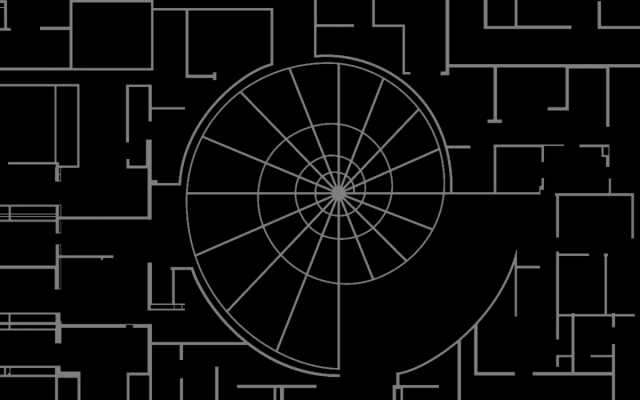
These narrative layers make for an already difficult reading experience, as we switch back and forth between multiple voices who all have their own way of writing (it’s made easier that each narrator is presented in a different typeface). But to add onto this, the visual appearance of the book reflects the spiraling and labyrinthian nature of Will Navidson’s house as he delves deeper into the mystery. The house is revealed to have opened a hallway in Will and Karen’s living room that extends into the darkness for miles and miles, all while sitting on the other side of the wall from their kitchen. This is of course, physically impossible. The hallway eventually opens up into a maze, a series of never-ending ashen-black tunnels that sometimes open up into rooms that are miles tall and miles wide. The book reflects this, altering the text into awful stretched forms, blocks that only take up fractions of the page, and often multiple pages where there is nothing printed at all. To boot, footnotes will lead you back and forth across the publication in an attempt to understand what they are calling back to. This makes for a difficult and laborious reading experience. This is where the internet gets stuck.
Over the last couple of years, House of Leaves has gained it’s place as an often-talked-about book that is “so good” and “so difficult to read.” As such, it formed a sort of pseudo-intellectualism around itself utilizing the barrier of it’s nontraditional structure as a point of gatekeeping. It’s a good book. Truly, it is. It’s compelling and it’s written incredibly well, with the borderline schizophrenic nature of Truant’s writings really making you feel like you’ve lost touch with reality yourself. Does it deserve the barrier that’s been placed upon it? No. The book is good fiction. There is no denying that the book is experimental and unique. But it gets to a point, as most discussion does with die-hard fans of anything, where the veil starts to thin on the dramaticism surrounding the novel. Taking one look at the subreddit for this book gives you an idea of what I’m talking about. Post after post of people excruciatingly annotating their copies, making it double-thick with sticky notes and posting pictures saying “look how deeply I analyzed it, it’s so complex that you have to do this, I’m just like Zampanò and Truant!” I am of course not slandering the name of people who like to annotate their readings, it is a completely valid method of deeply understanding a text. But feigning complexity does nothing more than turn people off from the work entirely.
I read the novel over the summer on lunch breaks at my job. After recommending the book to multiple people, I noticed this phenomenon firsthand. “No, it’s trying too hard.” “I’ve heard a lot about it, it doesn’t deserve the hype.” “The fanbase is insufferable.” It really is a downer. I thoroughly enjoyed my time with the book. Getting to explore that house alongside Navidson and his crew was a treat, and having to flip the book upside down, turn it sideways, and desperately try to find the location of footnote references was a wholly unique experience that you don’t get in many other places. And yet, the very nature of House of Leaves’s uniqueness somehow turns it into something to scoff at. It’s been sensationalized to the point of embarrassment, and an entirely new barrier has been put up in front of this story.
If you’ve never heard of this book, I’ve probably said too much already about the happenings within. Please go read it yourself. If you’re on the fence about it and you’ve got some time on your hands, do it. Just remember:
This is not for you.1
1The opening line of the book.


Leave a Reply