If you were a kid born anywhere between 1995 and the early 2000s, then you know all about the Mainframe Studios animated Barbie movies. Think Barbie in the Nutcracker or Barbie in the Twelve Dancing Princesses (a personal favorite, and I’d highly recommend Erin Craig’s horror-esque re-telling–A House of Salt and Sorrows). Whatever you do, don’t think Barbie in the Dreamhouse. I think that animation is crap. It lacks the same substance, the same cultural impact, that the Mainframe animated movies had. No offense to Margot Robbie, either. Her performance was flawless in the real-life version. But, to this day, I have to watch an original to fall asleep. And, no, that isn’t weird. I may be twenty-two, but I still have taste.
In the past few years, I’ve encountered more and more people who’ve only seen one, or a few Barbie movies at best (specifically the two I’ve already named). From someone who was punished as a child by having her Barbie DVDs taken, I’m very disappointed by that. I feel like something’s been lost, or withheld from those people. They have dead-eyes. Or, I’m making that up. I don’t know, but it also makes me very sad. So, let’s talk about my favorite trilogy in the entire franchise: Fairytopia. Though, it may be lost on some of you, perhaps this will convince you to give your children the joy that was once granted to me (by way of Barbie movie).
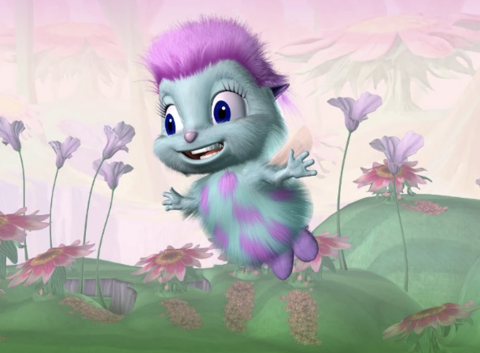
Fairytopia follows Elina, played by Barbie. She’s a fairy without wings (that’s like her whole thing). Nobody else in Fairytopia is wingless. So, she’s ostracized because of her difference, save for a single friend, ever-cautious Dandelion, a yellow-winged fairy with short, ginger curls. (And, of course, her adorable puff-ball Bibble, who the series would be nothing without). However, when she wakes to her home, peony, which is, you guessed it, a peony, wilting from within, she becomes privy to the fact that something is wrong in the Magic Meadow. The fairies simultaneously have issues flying because of a dangerous green fog that looms in the air.
“Myths” begin to circulate about the enchantress’s sister, Laverna, a villainous fairy who envies her sister’s power. She’s like Fairytopia’s version of Bloody Mary, except she’s very real. The threat of Laverna starts to become possible to them when their guardian, Topaz, is kidnapped. Elina, Bibble, and Dandelion decide to travel to Fairy Town to visit their guardian, Azura, for help. Quickly, they learn that only Elina is capable of such a journey. Dandelion, affected by the fog, must return to the Magic Meadow. Elina is wingless, and so can’t be affected by the fairy plague that Laverna has crafted. After Azura, who imparts the advice that strangers are just “friends you haven’t met yet”, gets kidnapped by a Fungus (laverna’s henchmen), Elina embarks on a quest to save her and the rest of Fairytopia. At the very end, once she’s defeated Laverna, she’s gifted with wings by the enchantress for her courage.
The consecutive movies (Barbie: Mermaidia, Barbie: Magic of the Rainbow) follow similar structures with the same villain, Laverna. I know I just spoiled the whole movie, but I encourage everyone to go and watch it. What I think is most impactful about these movies is the undercurrents that live in them. At the core of the first movie is Elina’s difference from those around her, and how she’s treated because of it. Yet, the others wouldn’t have survived without what they considered to be her “flaw”. It’s cliche for us, as adults, but think of someone in elementary school who has some kind of difference from their peers. Wouldn’t it mean something to watch a movie that transforms someone’s surface-level flaw into their strength?
I’m reminded of Barbie and the Three Musketeers, which explores misogyny and female perseverance. At the center of the movie lies the limitations that women face, a difficulty mirrored in our society even still. Or, it calls to mind Barbie: Mariposa, and how Mariposa is othered because she doesn’t have the same interests as the other butterfly fairies, or the same kind of popularity. She doesn’t conform to Flutterfield’s traditional ideas of femininity. But, because of her ability to see outside of those expectations and pave her own path, she’s able to save everyone. I also have to mention Barbie: Princess Charm School, in which Barbie as Blair, is bullied by the soon-to-be princess and her villainous mother because of her status as a poor person, a lottery winner, attending their prestigious school. Maybe, it’s not that deep. But, I know, as a child, there was a reason I loved these movies. They entertained me, but they often went deeper than that in some way (like a lot of animated television marketed for children, but not nearly as woman-centric or appealing animation wise). Aside from that, if you don’t really care about the societal commentary embedded in the narratives of the movies, then watch for the plot at least.
Finally, as Santa’s season approaches, I’d highly recommend watching both Barbie in the Nutcracker as well as Barbie in a Christmas Carol (honestly, you can skip Barbie: A Perfect Christmas–there’s nothing perfect about that movie). Since we’re also about to meet winter again, or some semblance of it in 2025, I’d watch Barbie in Swan Lake. For some reason, maybe because of the ballet, I think it’s a snow-time movie. Just fits the vibe, and the music is beautiful. I’ll leave you with this: “True courage is pursuing your dreams, even when everyone else says it’s impossible.”–Barbie as Corinne in The Three Musketeers.
Leave a Reply